The Rise of Eco-friendly and Biodegradable Cosmetic Ingredients
October 28, 2026
Author
A trusted global supplier of chemicals and ingredients. Leafchem connects international buyers with high-quality cosmetics, food additives, and plant extracts, driven by a commitment to customer satisfaction.
Sarah M.
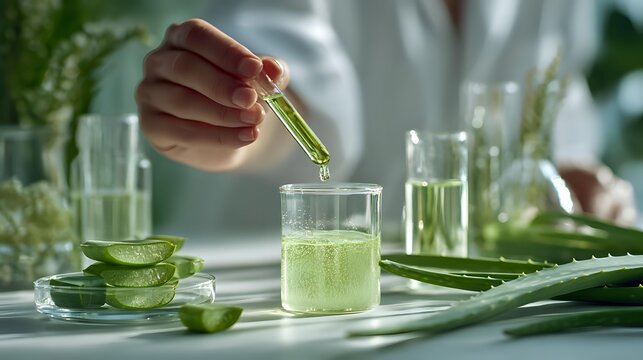
Clean labels, carbon footprints and “what happens after the rinse” are no longer niche concerns in beauty. Across Europe, North America and Asia, formulators and ingredient buyers are re-examining the environmental profile of every component that goes into a cream, a shampoo or a lipstick. Two qualities have emerged as the defining criteria of this shift: eco-friendliness and biodegradability. This article explains what these terms really mean, the regulatory and market forces behind them, and the ingredient families that are leading the transition — with practical guidance for formulators and sourcing teams.
I. Why “Eco-friendly” and “Biodegradable” Are Now the Baseline
Consumers are reading ingredient labels more carefully than ever. Retailers are tightening ingredient policies, and regulators on both sides of the Atlantic are re-examining substances that have been in service for decades. Three forces are converging:
Consumer expectations — shoppers increasingly reward brands whose products are plant-based, transparently labeled and gentle on the environment, and penalize those perceived as petrochemical-heavy or wasteful.
Environmental pressure — concern over microplastic pollution, packaging waste and the carbon footprint of cosmetic supply chains has moved from advocacy groups to mainstream media and procurement criteria.
Regulatory signals — laws and restrictions now directly shape what can be formulated and sold, as detailed below.
The result is that sustainability is no longer a marketing slogan; it is a sourcing criterion with measurable, documented requirements.
II. Defining the Terms: Natural Origin and Biodegradability
“Eco-friendly” is a broad umbrella. Underneath it, two qualities can be defined and measured:
Natural origin. ISO 16128-1:2016 defines a natural cosmetic ingredient as one obtained from plants, animals, micro-organisms or minerals, including through physical processes and fermentation; ISO 16128-2:2017 sets out how to calculate the natural-origin and organic-origin indices of an ingredient or product. Voluntary certification programmes such as COSMOS build on this logic, giving brands a verifiable way to substantiate “natural” claims.
Biodegradability. Biodegradation is measured with standardized laboratory tests. Under the OECD 301 series — the “ready biodegradability” screening tests — a substance is considered readily biodegradable when it achieves ≥ 60% degradation within 28 days (OECD 301B/C/D/F and 310) or ≥ 70% within the same window (OECD 301A/E). The International Fragrance Association (IFRA) applies these criteria when supporting biodegradability statements for fragrance ingredients along the supply chain.
It is worth distinguishing three concepts that are often conflated: renewable (derived from regenerating sources), recyclable (recoverable at end of life) and biodegradable (broken down by micro-organisms into carbon dioxide, water and biomass). A truly eco-friendly formulation may combine all three — but each claim must be documented separately.
III. The Regulatory Push Behind the Shift
Regulation is accelerating the transition faster than any single market trend.
European Union — the microplastics restriction. Commission Regulation (EU) 2023/2055, which began applying on 17 October 2023, restricts synthetic polymer microparticles — microplastics smaller than 5 mm that are organic, insoluble and resist (bio)degradation — when they are intentionally added to products. For cosmetics, the restriction provides sector-specific transition periods: rinse-off cosmetics until 16 October 2027, leave-on cosmetics until 16 October 2029, and make-up, lip and nail products until 16 October 2035 (with a labeling requirement from 17 October 2031). Biodegradable, soluble, natural and inorganic particles are outside the scope — a direct incentive for biodegradable alternatives.
United States — the Microbead-Free Waters Act. The Microbead-Free Waters Act of 2015 (Public Law 114-114) prohibits the manufacture and sale of rinse-off cosmetics containing intentionally added plastic microbeads, with the manufacturing ban taking effect from 1 July 2017. The Act defines a plastic microbead as any solid plastic particle less than 5 mm in size intended to exfoliate or cleanse the body.
EU cosmetics baseline. All cosmetic products sold in the EU must comply with the EU Cosmetics Regulation (EC) No 1223/2009, which governs safety, labeling and the use of restricted substances. Sustainability requirements are layered on top of this safety baseline — greener is not a substitute for safer.
IV. Ingredient Families Leading the Transition
Across the cosmetic palette, several ingredient families are emerging as the workhorses of eco-friendly, biodegradable formulations:
Ingredient family
Representative examples
Key functions
Sustainability profile
Plant-derived emulsifiers & emollients
Glyceryl stearate (GMS); cetearyl alcohol; plant oils and butters
Emulsification, thickening, skin feel
Renewable feedstocks; typically biodegradable; natural-origin documentation available
Natural extracts & essential oils
Eucalyptus oil; botanical extracts
Fragrance, cooling, antimicrobial, active benefits
Steam-distilled from renewable plant biomass; biodegradable
Glyceryl monostearate (GMS, CAS 31566-31-1) is a non-ionic emulsifier produced from renewable glycerin and vegetable stearic acid; as an ester of glycerol and fatty acids it is typically biodegradable, and it replaces more complex synthetic emulsifier systems in creams and lotions. Eucalyptus oil (Eucalyptus globulus leaf oil, CAS 8000-48-4) is steam-distilled from renewable plant biomass and brings cooling, antimicrobial and fragrance functions to personal care and flavor applications — a natural alternative to synthetic cooling and antimicrobial actives.
As a rule, “green” claims must be substantiated rather than assumed. A supplier should be able to provide natural-origin documentation consistent with ISO 16128, biodegradability test data where applicable, and a full certificate of analysis for every batch.
V. What Formulators and Buyers Should Consider
Moving a formulation toward eco-friendly, biodegradable ingredients is not simply a matter of swapping one raw material for another. Five practical points deserve attention:
Verify claims with documentation. Ask suppliers for COA, MSDS, natural-origin statements consistent with ISO 16128, and biodegradability test data (e.g., OECD 301) where relevant. Unverified “green” claims are a compliance and reputational risk.
Balance performance and sustainability. Natural systems sometimes require higher use levels or different processing windows than their synthetic counterparts. Full stability testing is essential before launch.
Plan for regulatory timelines. With EU microplastics restrictions phasing in through 2035 and retailer policies tightening faster, reformulation should begin before a mandatory deadline forces a rushed switch.
Build supply-chain resilience. Prefer suppliers with stable capacity, consistent specifications and multi-market compliance, so the same batch can serve several markets.
Understand the true cost. Verified sustainability has a price — in raw materials, testing and documentation. Budget for it rather than being surprised at contract stage.
Conclusion
The shift toward eco-friendly and biodegradable cosmetic ingredients is structural, not cyclical. Consumer expectations, retailer policies and regulatory timelines are all moving in the same direction, and the pace is set by documented, measurable criteria rather than marketing language. Brands and formulators that verify their sustainability claims today — with reliable suppliers, complete documentation and stable supply — will be best positioned as regulation tightens and scrutiny grows.
Leafchem is a professional manufacturer and supplier of cosmetic ingredients, food additives and fine chemicals. From plant-derived emulsifiers such as glyceryl monostearate (GMS) to natural essential oils such as eucalyptus oil, our portfolio supports the move toward cleaner, more biodegradable formulations. Every shipment is delivered with full COA and batch traceability, and our team supports natural-origin and regulatory documentation for global markets. To discuss your next formulation, contact our team today.






 Clean labels, carbon footprints and “what happens after the rinse” are no longer niche concerns in beauty. Across Europe, North America and Asia, formulators and ingredient buyers are re-examining the environmental profile of every component that goes into a cream, a shampoo or a lipstick. Two qualities have emerged as the defining criteria of this shift: eco-friendliness and biodegradability. This article explains what these terms really mean, the regulatory and market forces behind them, and the ingredient families that are leading the transition — with practical guidance for formulators and sourcing teams.




 IPv6 network supported