Guanidine Carbonate: The Indispensable "All-Rounder" in Biochemistry and Pharmaceutical Sciences
November 25, 2025
Author
A trusted global supplier of chemicals and ingredients. Leafchem connects international buyers with high-quality cosmetics, food additives, and plant extracts, driven by a commitment to customer satisfaction.
Sarah M.
Behind biochemistry laboratories and pharmaceutical production lines is a fundamental yet critical compound—guanidine carbonate(CAS 593-85-1). As a top-grade organic base salt, it is a silent cornerstone for biochemical research, pharmaceutical manufacturing, and fine chemical production. This article explores this versatile all-rounder, trusted by global labs and pharmaceutical companies for its pivotal role in research and industry.
I. Understanding Guanidine Carbonate: A Strongly Basic Molecular Tool
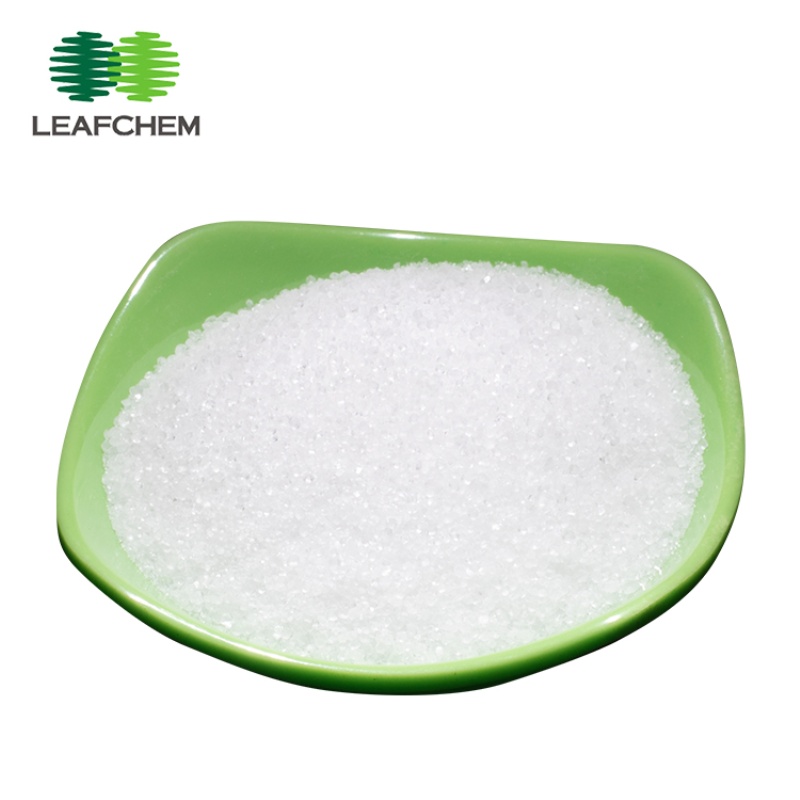
Guanidine carbonate (molecular formula: (CH₆N₃)₂·H₂CO₃) is a high-purity strong organic base salt with exceptional chemical properties. It appears as a white crystalline powder/granule, highly soluble in water to form a strongly alkaline solution. Its guanidyl groups provide two key traits: strong hydrogen-bonding capacity and efficient protein denaturation, making it a go-to reagent for protein extraction, RNA purification, and pharmaceutical intermediate synthesis.
II. Core Applications: Tailored Solutions for Three Key Sectors
Guanidine carbonate’s value shines in three core areas, serving as a versatile raw material for global labs and manufacturers:
1. A Reliable Workhorse for Biochemistry Research
As a classic protein denaturant in molecular biology and protein chemistry, it has two key applications:
- Protein Extraction and Purification: A 6–8M guanidine carbonate solution disrupts protein tertiary/quaternary structures, enabling efficient extraction from complex systems or inclusion bodies—essential for recombinant protein preparation.
- RNA Extraction Protectant: It irreversibly inhibits RNase activity to prevent RNA degradation, acting as a core component in commercial RNA extraction kits for gene expression studies and diagnostics.
2. A Precision Reagent in Pharmaceutical Industry
It fulfills key synthesis and purification roles inpharmaceutical R&D and large-scale manufacturing:
- Intermediate Synthesis: As an alkaline/guanidylation agent, it helps construct molecules with guanidyl pharmacophores, critical for antiviral drugs and other pharmaceuticals.
- Purification Processes: Its strong alkalinity adjusts reaction pH or precipitates impurities, ensuring the purity and safety of pharmaceutical intermediates.
3. A Specialized Raw Material in Fine Chemicals
Beyond biopharma, it is a high-value raw material in fine chemical production:
- Resin Crosslinking Agent: Acts as an amino resin curing agent, enhancing coating and adhesive adhesion and durability.
- Flame Retardant Component: An additive in eco-friendly polymer flame-retardant formulations, meeting global safety standards.
- Daily Chemical Raw Material: Its strong alkalinity suits specialized industrial/household cleaning products for effective degreasing.
III. Quality Selection: Key Specifications
To ensure stable experimental and production results, prioritize these specifications when selecting high-grade guanidine carbonate:
- Solubility and Clarity: Fully soluble in water, forming a clear, homogeneous solution with no visible particulates.
- Solution Alkalinity: Stable, strong alkalinity for consistent performance across applications.
- Biological Grade Certification: DNase/RNase/protease-free for life science research to avoid experimental interference.
IV. Safety Guidelines: Handling and Storage
As a strongly alkaline compound, follow these safety protocols for workplace safety and product stability:
- PPE: Wear chemical-resistant gloves, goggles, and a dust mask when handling the powder.
- Operating Environment: Use in a well-ventilated area (preferably a fume hood), especially for high-concentration solutions.
- Storage: Seal tightly, store in a cool/dry/well-ventilated area, and separate from acidic substances.
Conclusion
LeafchemGuanidine carbonate is a solid bridge between basic research and industrial applications, thanks to its unique properties. As an indispensable all-rounder in biochemistry, pharmaceutical sciences, and fine chemical production, it drives progress in biomedicine and related fields, serving as a critical raw material for modern industry and research.








 IPv6 network supported